A platform for non-invasive host gut transcriptomics
Foli-seq™ profiles host RNA from epithelial and immune cells shed into stool, providing a non-invasive window into local gut biology across inflammation, barrier function, tissue injury, repair, and therapeutic response.
6,500+
Samples analyzed
4
Species supported
7
Foli-seq™ Panels
11,000+
Genes in Universal Panel
How It Works
From ambient stool collection to gut biology readout
01
Ambient Stool Collection
Foli Bio’s optimized stabilization workflow supports ambient stool collection and shipping while preserving host RNA signals for downstream Foli-seq™ profiling.
02
Host RNA Preservation & QC
Stool samples are processed through optimized workflows that assess host RNA quality and signal recovery before sequencing.
03
Host RNA Enrichment
Foli-seq™ enriches host-derived RNA from exfoliated intestinal cells while reducing non-host background from dietary, bacterial, and fungal sources.
Foli-seq™ turns stool-derived host RNA signals into molecular readouts of local gut biology, disease state, treatment response, and host signatures.
Transcriptomic Science
Why fecal RNA captures mucosal biology better than blood
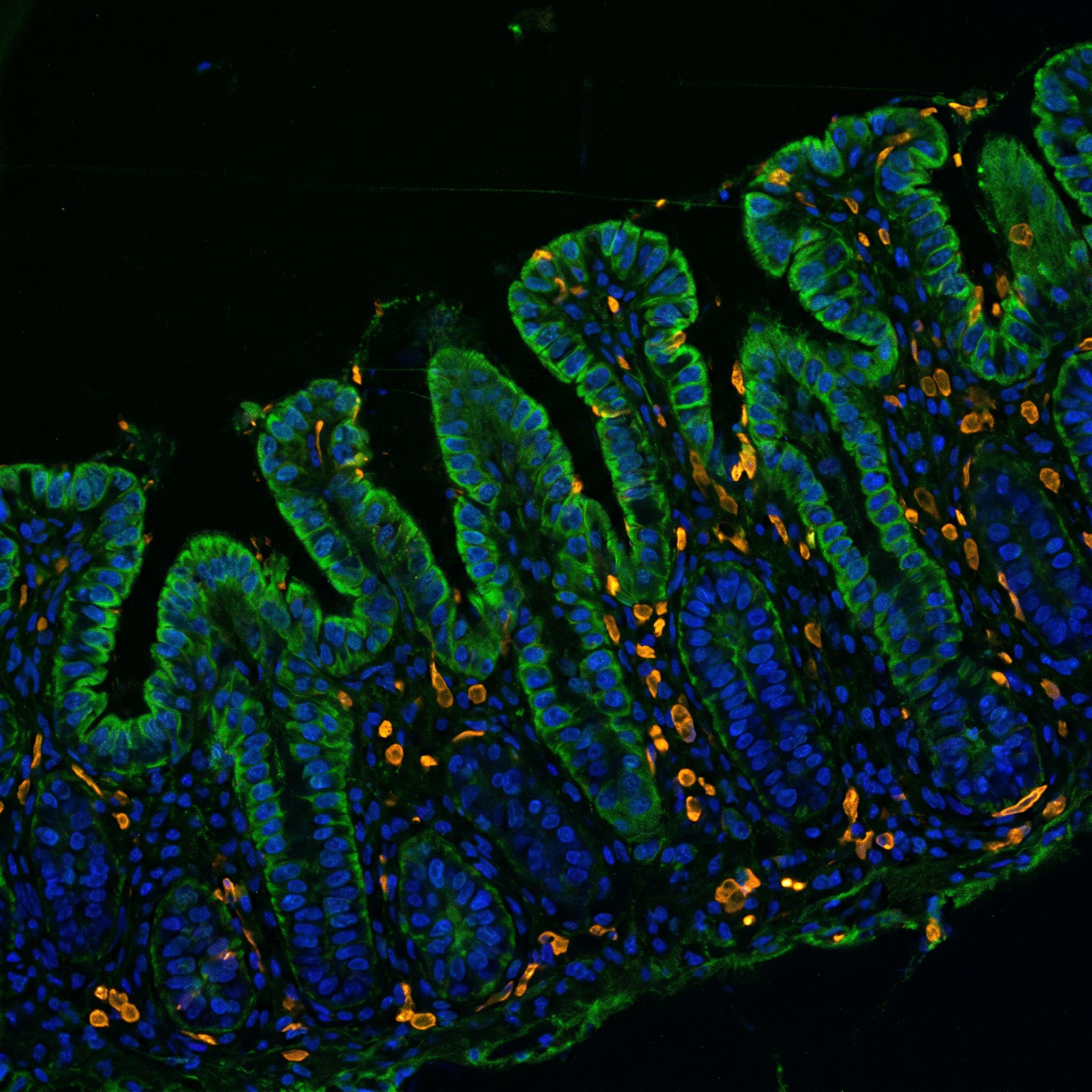
Intestinal Biopsy · Mucosal Structure
Host RNA
from exfoliated cells
Local signal
from gut mucosa
Transcriptomic
functional molecular readout
Core Biology
A local transcriptomic readout of the gut mucosa.
The intestinal mucosa continuously sheds epithelial and immune cells into stool. These exfoliated host cells carry RNA signatures that reflect local tissue programs, including inflammation, barrier function, epithelial state, injury, repair, and treatment response. Foli-seq™ captures this stool-derived host RNA to provide a non-invasive transcriptomic readout of host gut biology.
TNF · CXCL8 · IL1B
Inflammatory signaling and immune cell recruitment
Inflammation
MUC2 · FCGBP · TFF3
Goblet cell activity & mucosal barrier integrity
Barrier & Mucus Function
CEACAM5 · REG4 · CLDN2
Host signatures linked to remodeling and disease activity
Disease-associated
Peer-reviewed foundation
Built on work from our founding team
Foli-seq™ is built on peer-reviewed work demonstrating that stool-derived host RNA can capture transcriptomic signals from exfoliated intestinal cells and provide a non-invasive readout of gut mucosal biology.
Fecal exfoliome sequencing captures immune dynamics of the healthy and inflamed gut
Published in Nature Biotechnology 2025
This study established the scientific foundation for profiling host RNA from exfoliated intestinal cells in stool, supporting non-invasive measurement of mucosal inflammation, epithelial state, immune activity, and longitudinal gut biology.
Foli-seq™ profiles host RNA from naturally shed gut epithelial and immune cells present in stool. Unlike microbiome sequencing, which measures microbial DNA or RNA, Foli-seq™ captures the host response at the gut lining — including immune signaling, epithelial state, barrier function, tissue injury, repair biology, therapeutic response, and polyp- or adenoma-associated changes.
Source material
Exfoliated gut epithelial & immune cells
What is profiled
Host RNA gene expression
Not profiled
Microbial DNA or microbial transcriptomes
FROM STANDARD PANELS TO CUSTOM READOUTS
Built around the biology being measured
Standard Foli-seq™ panels
Curated human, murine, canine, and feline panels for immune activity, epithelial barrier biology, tissue injury, repair biology, treatment response, and discovery profiling.
Custom biology panels
Study-specific gene panels can be developed around defined biological questions, therapeutic mechanisms, disease areas, or target pathways.
Molecular signatures
Panel data can support host-response signatures for disease state, treatment response, patient subgroup discovery, and molecular diagnostics development.
FOLI-SEQ™ PANELS
Standard Foli-seq™ panels for human, mouse, and companion animal studies
Foli-seq™ panels profile stool-derived host RNA across immune activation, epithelial barrier function, tissue injury, repair biology, therapeutic response, and polyp- or adenoma-associated biology.
Human and murine panels share a tiered architecture to support translation from preclinical models to human studies. Companion animal panels extend the platform to canine and feline GI biology. Gene-level panel information can be explored in the Panel Browser below.
Human Panels
Translational studies
Human Immune Panel
500+ genes · Targeted immune biology
Human Gut Function Panel
1,800+ genes · Epithelial and barrier biology
Human Universal Panel
11,000+ genes · Broad discovery profiling
Mouse / Preclinical
Murine model studies
Murine Immune Panel
500+ genes · Targeted preclinical immune biology
Murine Gut Function Panel
1,800+ genes · Epithelial and barrier biology
Companion Animal
Canine and feline GI studies
Canine Core GI Host Panel
1,100+ genes · Core GI biology
Feline Core GI Host Panel
1,100+ genes · Core GI biology
Human Foli-seq™ panels provide tiered coverage of host gut biology, from focused immune profiling to broad transcriptomic discovery. The three-tier panels support longitudinal monitoring, treatment-response biology, biomarker discovery, and molecular signature development across gastrointestinal disease areas.
Targeted Panel
500+
genes profiled
Foli-seq™ Human Immune Panel
Focused host immune and inflammatory profiling across immune signaling, cytokine and chemokine response, epithelial immune crosstalk, and therapeutic response biology.
Broad coverage of epithelial, barrier, mucus, metabolic, injury, and repair biology in the gut mucosa, enabling deeper profiling of local host functional state.
Companion animal Foli-seq™ panels extend non-invasive host gut transcriptomics to canine and feline GI biology. Core GI host panels profile inflammation, epithelial injury, barrier function, repair biology, treatment response, and host functional state across dog and cat studies.
Core GI Panel
~1,000
genes profiled
Foli-seq™ Canine Core GI Host Panel
Core host gut biology panel for canine GI inflammation, epithelial injury, barrier function, repair biology, treatment response, and functional state.